Big Corvina

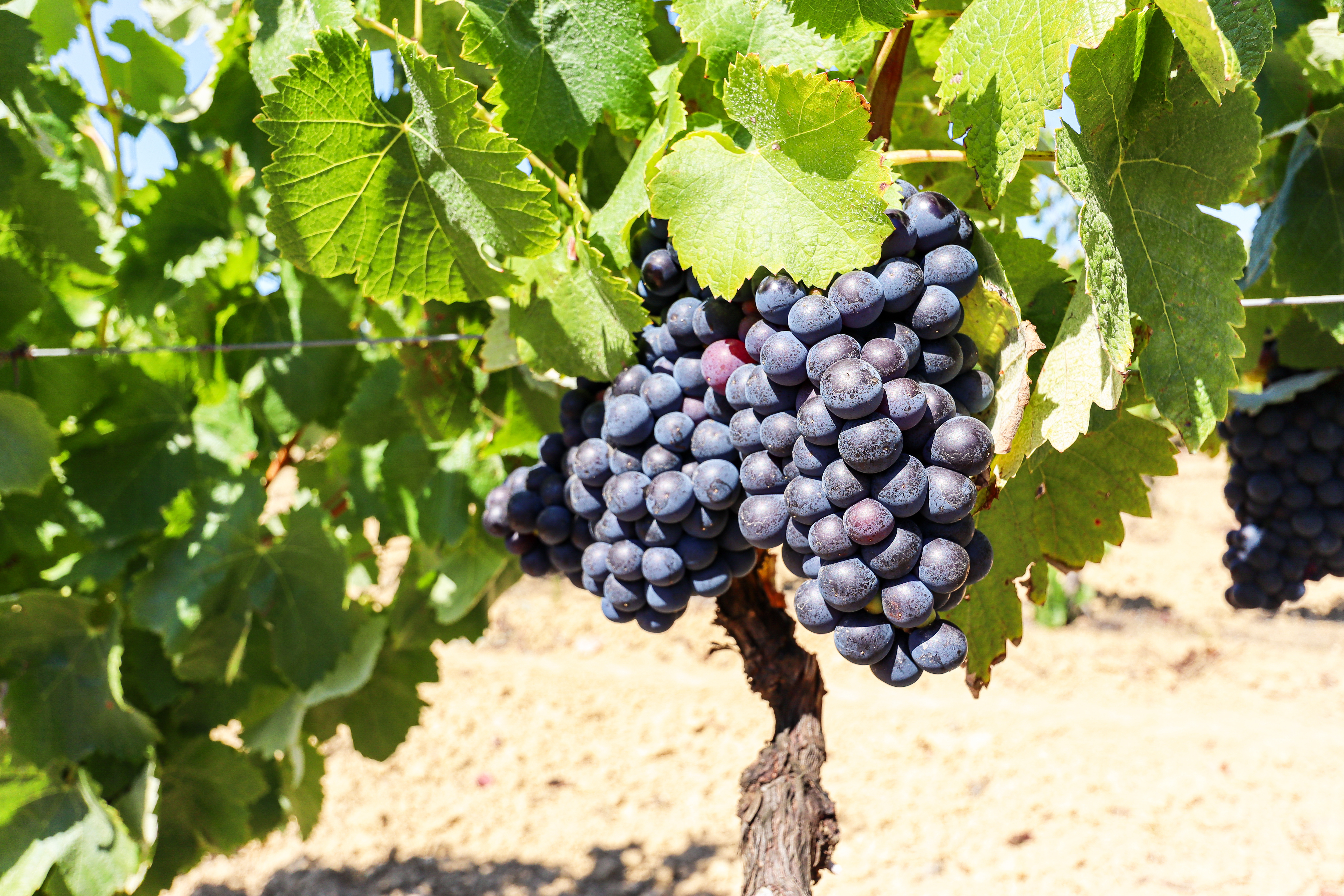
Big CorvinaFor generations, it was assumed that Corvinone—the big-berried, dark blue-black grape grown sparsely throughout Veneto—was a roly-poly mutation of the locally renowned Corvina grape variety. Thus, it was given the name Corvinone—”big Corvina”—and tolerated for use (in limited quantities) alongside Corvina in some of the red wines of the region, namely the Valpolicellas and the Bardolinos.

However, in 1993, S. Cancellier and U. Angelini—as published in the Vignevini Journal of the University of Bologna—gave the world proof that Corvinone is a separate grape variety. Corvinone is, they stated, most likely related to Corvina, but distinct, nonetheless.

According to Italy’s Registro Nazionale delle Variet di Vite, Corvinone tends to break bud fairly late, experience medium timing in flowering and veraison, and is a medium-to-late ripener (germogliamento: tardiva, fioritura: media, invaiatura: media, naturazione: medio-tardiva). Both the bunches and the individual grape berries are noted for being large in size and distinctly larger than Corvina. Corvinone is quite able to respond to water stress and takes well to drying; for this reason, it often goes through the appassimento process for use in Amarone and Recioto.

I have never encountered a varietal Corvinone wine, although they are allowed (at least in theory) to be produced under the IGT Veneto, IGT Vallagarina, or IGT Verona.  These wines might show the typical primary aromas of Corvinone, including red and black fruits such as cherry, raspberry, and blackberry; floral notes (violet), cocoa, and tobacco.

We are not quite sure from where the name Corvina, and thus Corvinone, is derived. However, many experts suggest that the grapes were named for their dark blue-black color, reminiscent of the color of the feathers of a raven (corvo in Italian).

For super-advanced students of wine: Late last year, the disciplinari for the wines of Valpolicella (Amarone della Valpolicella DOCG, Recioto della Valpolicella DOCG, Valpolicella DOC,  and Valpolicella Ripasso DOC) were all revised to allow 45% to 95% Corvina OR Corvinone grapes in the wines. You might recall that, up until this change, the allowed amount of Corvinone was limited to no more than 50% of the amount of Corvina used. This limitation has been now removed for all the variants of Valpolicella. The allowance for Bardolino DOC and Bardolino Superiore DOCG remains unchanged for now (35% to 80% Corvina, of which 20% may be replaced by Corvinone).

References/for more information:

Post authored by Jane A. Nickles…your blog administrator: jnickles@societyofwineeducators.org
Welcome to the World, Île-de-France PGI!

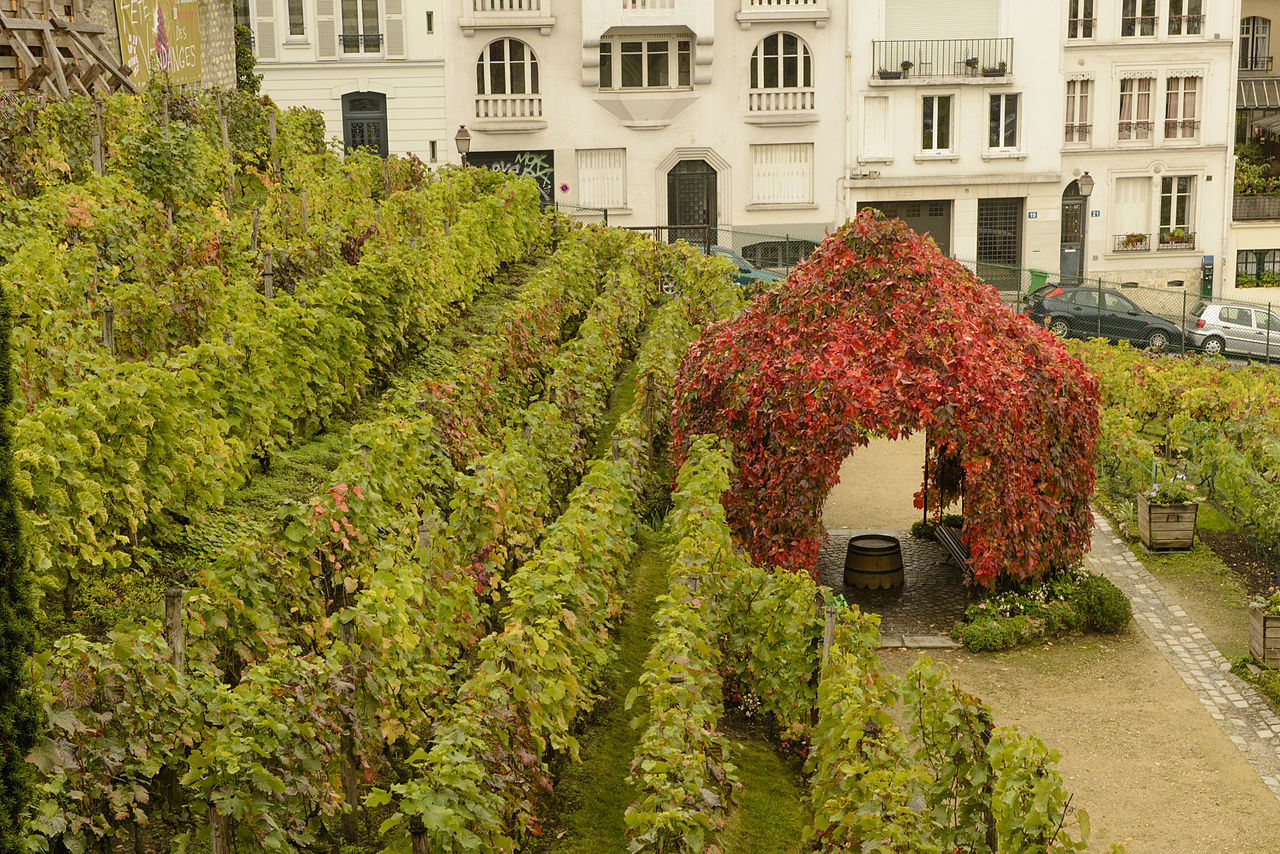
Photo of Clos Montmartre by Par Son of Groucho via Wikimedia Commons

Photo of Clos Montmartre by Par Son of Groucho via Wikimedia Commons

On May 25, 2020, France’s Bulletin Officiel du Ministère de l’Agriculture et de l’Alimentation (Official bulletin of the Ministry of Agriculture and Food) announced the approval of the Île-de-France Protected Geographical Indication (PGI) for red, white, and rosé wines.

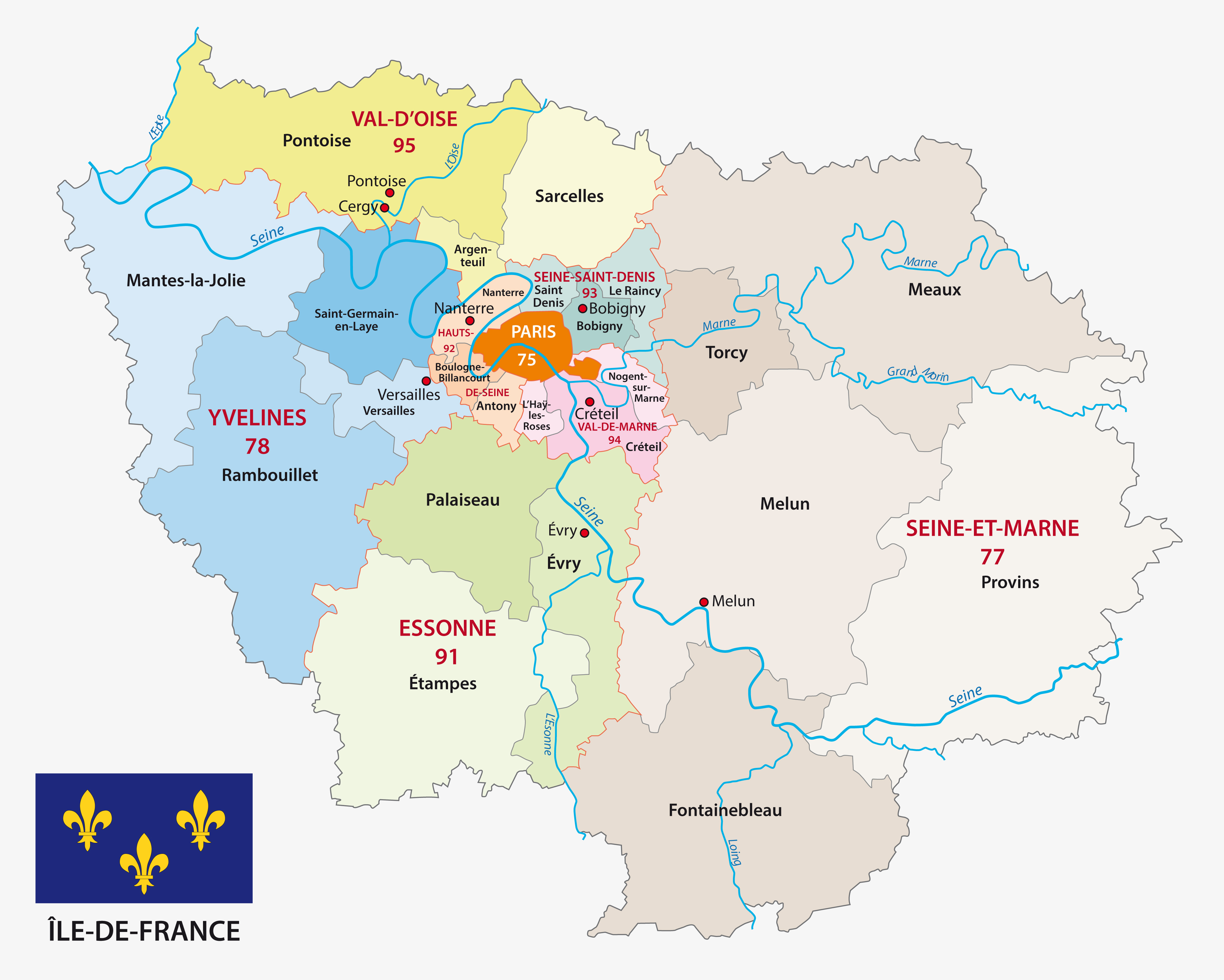
Wine produced from grapes grown anywhere within the Île de France administrative region will be eligible. Aisne, a department located in the neighboring Hauts-de-France region is also included in the defined area. More specifically, the Île de France PGI includes five sub-appellations:

  • Coteaux de Blunay—covering the commune of Melz-sur-Seine, located on the eastern border of the Île de France (about 50 miles southeast of Paris)
  • Coteaux de Suresnes-Mont-Valérien—Suresnes is a commune in the western suburbs of Paris, located about 9 km/5.3 miles from the Paris city center
  • Coteaux de Provins—covering the commune of Provins, located about 10 miles northwest of Melz-sur-Seine
  • Guérard—covering the communes of communes de Guérard, Tigeaux et Crécy-la-Chapelle (located about 28 miles west of Paris, and just a few miles from Disneyland Paris)
  • Paris—covering the city of Paris, including its famous Montmarte Vineyard
.

.

A long list of grape varieties are permitted—33 white varieties, 8 pink (gris/rose) varieties, and 30 red varieties. Most or all of the grapes you would think of as typical French varieties—including Chardonnay, Pinot Noir, Chenin Blanc, Gamay, Merlot, Cabernet Sauvignon, and Sauvignon Blanc—are included in the list. Some unique grapes—such as Meslier Saint-François, Chasselas, Mûller-Thurgau, Romorantin, and César. (For a complete list, see the Cahier des Charges, linked below.)

The Île-de-France  PGI title is approved for still (non-sparkling) wines and includes allowances for primeur or nouveau wines to be released on the third Thursday of November (of the harvest year).

Wine-producing vineyards in and around the city of Paris were widespread in the 18th century and at one time occupied 42,000 hectares (103,000 acres) of land. These vineyards all but disappeared after the Second World War; but were brought back to life in 1933 with the planting of 2,00 vines in the Clos de Montmartre vineyard. Clos de Montmartre—the famous “urban vineyard” of Paris—is located on the north side of the Hill of Montmartre just a short walk from the Basilica of Sacré-Cœur de Montmartre.

Later—in 1965—the Municipal Vineyard of Suresnes/Clos-du-Pas Saint Maurice was replanted on the crest of Mont-Valérien, just across the Seine River from the Bois de Boulogne Park in Paris’ 16th arrondissement. Today, the vineyard produces an average of 4,500 bottles of white wine per year and is an under-the-radar “find” for smart (or lucky) tourists.

With this announcement, we can be certain to find PGI wines from the Île-de-France in our local neighborhood wine shops soon (that is, as long as your local neighborhood wine shop is located somewhere in or close to Paris).

Welcome to the World, Île-de-France PGI!

References/for more information:

Post authored by Jane A. Nickles…your blog administrator: jnickles@societyofwineeducators.org
Dispatch from the Anjou Brissac AOC

News flash: The Anjou Villages-Brissac AOC has officially changed its name to Anjou Brissac AOC. (Well, that’s a bit of a minor news flash—maybe more like a news sparkle—but wine geeks will want to know.)

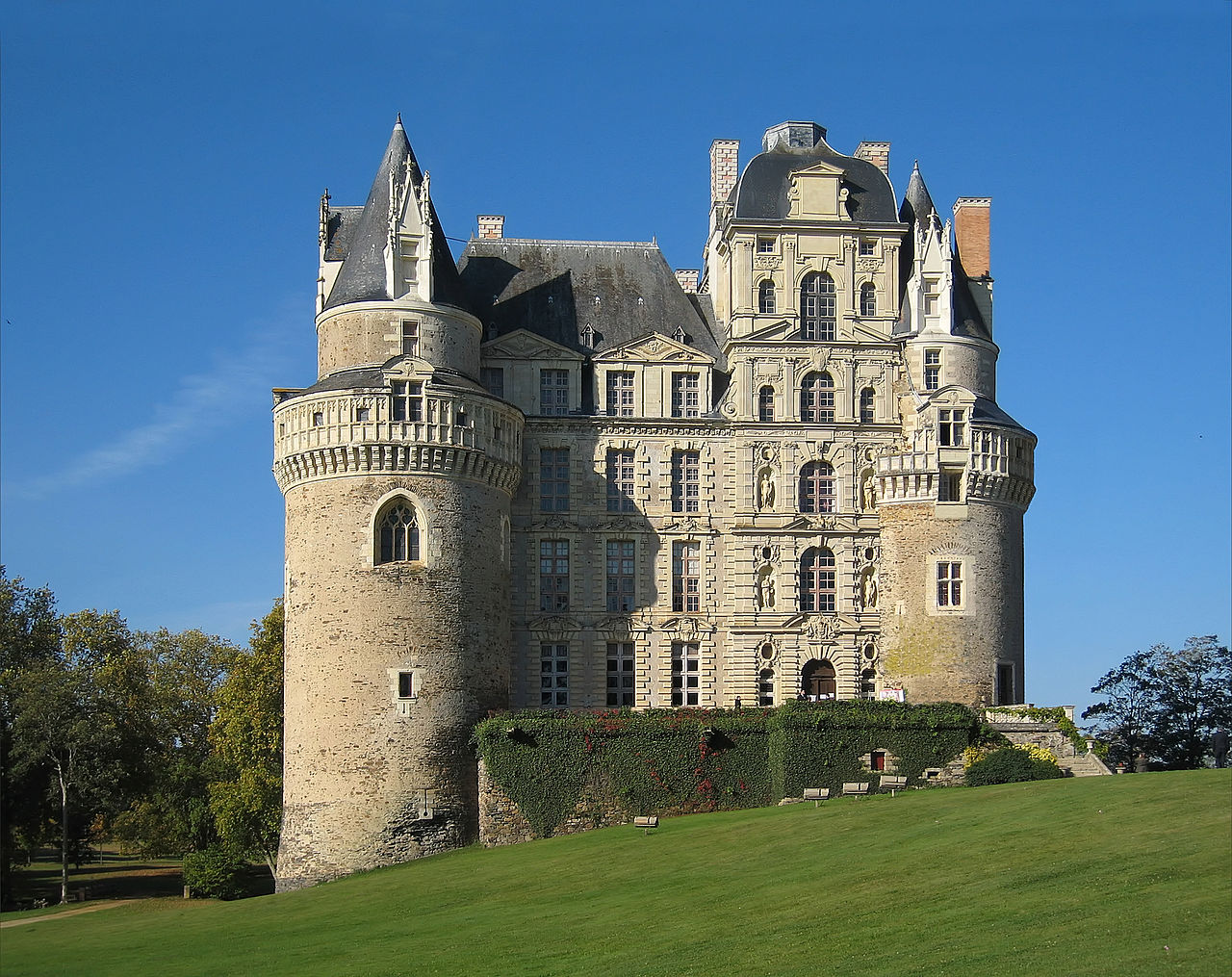
Photo of Château de Brissac by Manfred Heyde via Wikimedia Commons

Photo of Château de Brissac by Manfred Heyde via Wikimedia Commons

The Anjou Brissac AOC produces dry, still (non-sparkling) red wines only. These are defined quite elegantly in French as vins tranquilles rouges. These wines are based primarily on Cabernet Franc (which leads the area in plantings), although Cabernet Sauvignon is also allowed in any amount. The wines of the Brissac Anjou AOC enjoy a reputation as perhaps the finest red wines of the Anjou, and are considered to be a bit fuller-bodied and richer in flavors (dark cherry, raspberry, cocoa, cinnamon) than most red wines of the Anjou. Anjou Brissac AOC wines are proudly produced by a limited number of wineries (around 30).

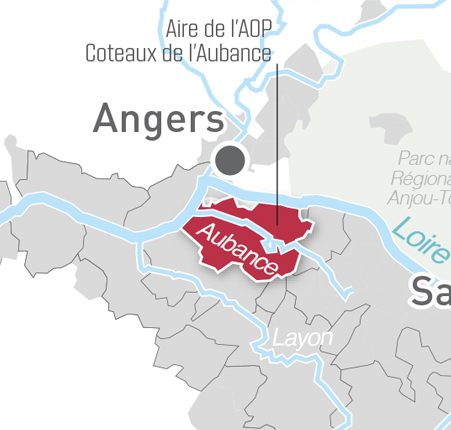
The Anjou Brissac AOC is located just south of the city of Angers, adjacent to the left bank of the Loire River. The area extends southwest for just over 9 kilometers (5.5 miles) over the gently rolling hills on the edge of the Massif Armorican. Vineyards are planted along both sides of the Aubance River (a tributary of the Loire). The unique soils of the area comprise mainly schist and gravel over a bedrock of shale and limestone.

If you are planning on touring the area, be sure and make some time to see the Château de Brissac. The château was originally built as a castle by the Counts of Anjou in the 11th century. It was later gifted to Charles II de Cossé along with the title of Duke of Brissac.  The château—still owned by the Cossé-Brissac family—has seven stories, making it the tallest château in the Loire Valley. In non-quarantine times, the château is open to the public for tours and overnight stays, while the lovely grounds frequently host concerts and festivals—including the annual Val de Loire festival.

Map via: https://www.vinsvaldeloire.fr/

Map via: https://www.vinsvaldeloire.fr/

Here are a few other interesting tidbits about Anjou Brissac:

  • The Anjou Brissac AOC occupies the exact same geographic location as the Coteaux de l’Aubance AOC. The Coteaux de l’Aubance AOC produces Chenin Blanc-based, sweet white wines.
  • The area covered by the Anjou Brissac AOC (as well as the Coteaux de l’Aubance AOC) is located within the Maine-et-Loire département, and includes the following communes: Brissac Loire Aubance (comprising the former communes of Brissac-Quincé, Saint-Saturnin-sur-Loire, and Vauchrétien), Denée, Les Garennes sur Loire (comprising the former communes of Juigné-sur-Loire et Saint-Jean-des-Mauvrets), Mozé-sur-Louet, Mûrs-Erigné, Saint-Melaine-sur-Aubance, and Soulaines-sur-Aubance
  • The appellation was created (as Anjou Villages Brissac) in 1998, when it was separated out from the much larger Anjou Villages AOC.

Regulations on the wines:

  • Minimum 11% abv
  • Maximum 3g/L of residual sugar
  • May be released on July 15 of the year following harvest (although the wine is considered to have excellent potential for aging)

Leading producers of Anjou Brissac AOC include Domaine de Gaubourg, Château la Varière, and Domaine de Montgilet.

Confusion Corner: This change does not affect the Anjou Villages AOC which (confusingly) is a separate appellation from the (former) Anjou Villages Brissac AOC.

References/for more information:

Post authored by Jane A. Nickles…your blog administrator: jnickles@societyofwineeducators.org
Dispatch from Ribera del Duero (and Ribera Blanco DO)

.

.

In March of 2020, Spain’s Ministry of Agriculture approved a proposal to modify the Pliego de Condiciones for the DO Ribera del Duero. The new rules allow for the production of white wines based on the Albillo Mayor grape variety to be bottled under the Ribera del Duero DO, beginning with the 2020 vintage.

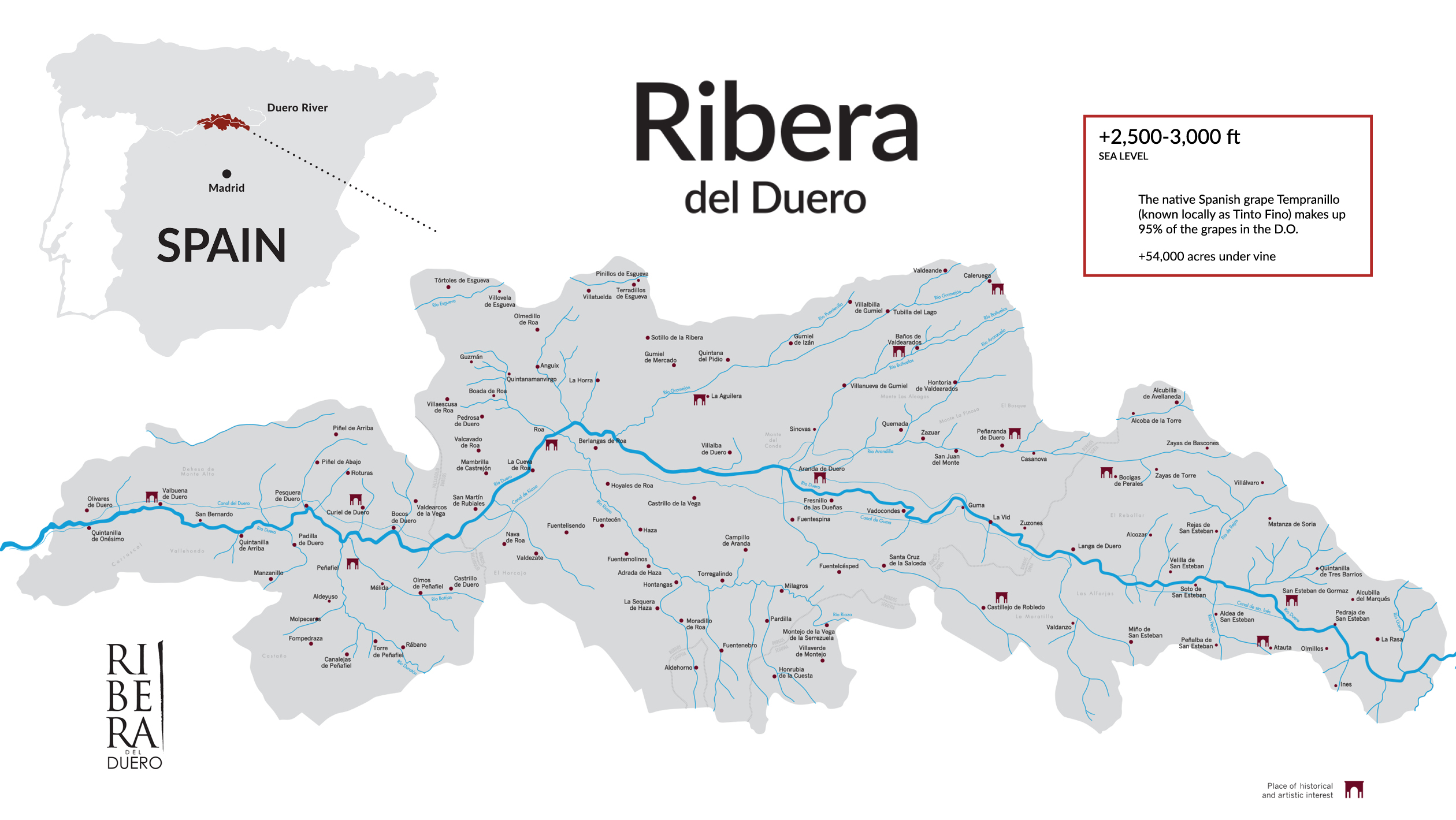
The Ribera del Duero DO—located in Castilla y León—was established in 1982 and quickly made a name for its flavorful red wines based on a minimum of 75% Tempranillo (often referred to here as Tinta del País or Tinto Fino). The red wines of the area always allowed for the inclusion of up to 5% Albillo Mayor—a white grape believed to be native to the area and grown in minute quantities but renowned for the rich aromatic notes and softening effect the it brought to the red wines of the region. Rosado is also produced in the area, often based on Garnacha with perhaps a bit of Merlot, Malbec, Cabernet Sauvignon or Albillo Mayor in the blend.

.

.

With the newly-published revisions in the rules, the Ribera del Duero DO is now producing white wines—known as Ribera Blanco—based on a minimum of 75% Albillo Mayor. The other white grapes allowed include Alarije (Pirulés) and Chasselas—provided they were planted prior to July 21, 1982.

Ribera Blanco may be produced via stainless steel fermentation as a light, fruity wine intended for early consumption. Such wines have been described as having delicate fruit flavors (green apple, lemon, pear) and lightly floral aromas.

Ribera Blanco may also be produced via oak fermentation and/or oak aging; and may be bottled under the typical aging designation for Spanish DOP wines (crianza, reserva, and gran reserva). Such wines are expected to show hints of gold or amber in the color and exhibit aromas of ripe pear, dried fruit, oak, smoke, beeswax, and vanilla.

The proposal to allow for the production of Ribera Blanco was originally published by El Boletín Oficial del Estado (BOE) of Spain on July 27, 2019. While the new DO regulations have been approved at the national level, they will still need to work their way through the EU approval process.

Map via: riberadelduero.es

Map via: riberadelduero.es

References/for more information:

Post authored by Jane A. Nickles…your blog administrator: jnickles@societyofwineeducators.org
Dispatch from Soave (and 33 New Crus)

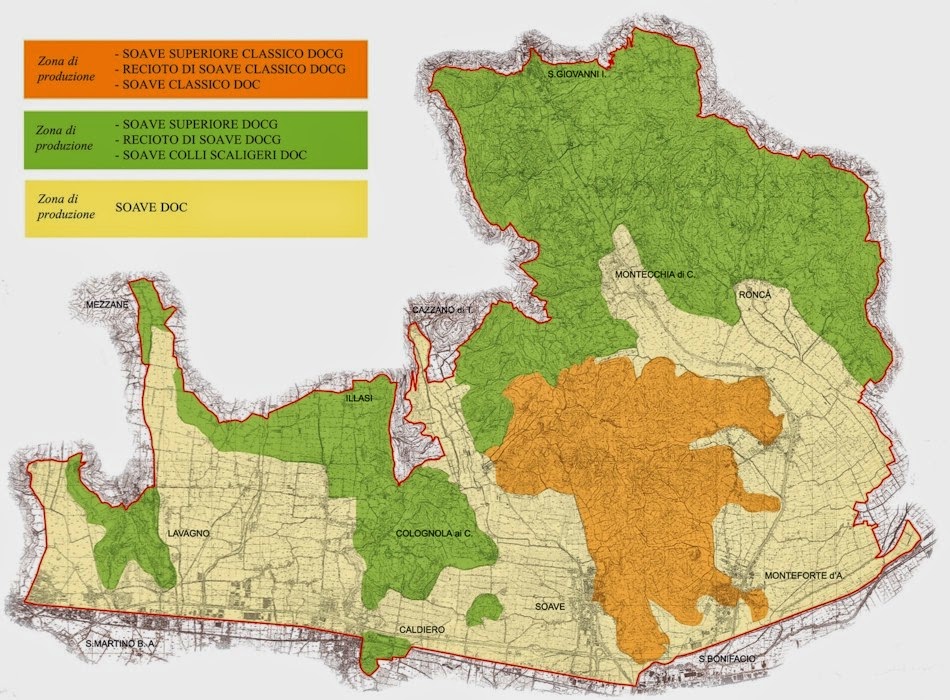
Map of the traditional regions of Soave/credit: Casa del Vino (own work) via Wikimedia Commons

Map of the traditional regions of Soave/credit: Casa del Vino (own work) via Wikimedia Commons

Soave DOC—Veneto’s beloved Garganega-based white wine—has entered a new phase with the approval of 33 new subzones. The new geographical indications were approved by the Italian Ministry of Agriculture in October of 2019—and as of March 2020, they have been approved and published in the Official Journal of the European Union.

The Soave zone has traditionally contained two subzones: Soave Classico and Soave Colli Scaligeri. The Classico zone—the original, central part of the region located about 10 miles east of the city of Verona—consists of an expanse of rolling hills within the communes of Soave and Monteforte d’Alpone. The discontinuous Colli Scaligeri subzone contains a series of hillsides surrounding the city of Verona. The name is a reference to the Della Scala family (the Scaligeri)—former Lords of Verona and once-upon-a-time owners of the land.

Vigne del Soave—a comprehensive project to map the Soave region by soil types, elevation, micro-climate, topography, and historical usage—has been in the works via the Soave Consortium for over a decade. The project was completed in 2019 with the formal designation of 33 unique geographical subzones officially known as “Additional Geographical Units” or Unità Geografica Aggiuntiva.  

Photo via: https://ilsoave.com/

Photo via: https://ilsoave.com/

The 33 new Crus of Soave are as follows: Castelcerino, Colombara, Froscà, Fittà, Foscarino, Volpare, Tremenalto, Carbonare, Tent, Corte Durlo, Rugate, Croce, Costalunga, Coste, Zoppega, Menini, Monte Grande, Ca ‘del Vento, Castellaro, Pressoni, Broia, Brognoligo, Costalta , Paradiso, Costeggiola, Casarsa, Monte di Colognola, Campagnola, Pigno, Duello, Sengialta, Ponsarà, Roncà–Monte Calvarina.

Of the 33 newly-designated areas, 28 are located within the Classico Zone. Two—resting atop volcanic soils—are located near the commune of ​​Roncà (to the north and east of the Classico Zone), and three are in the limestone hills located in the western portion of the region.

The new designations are approved for use beginning with the wines of the 2019 vintage.

Click here for an interactive map of the 33 crus of Soave, via the website of the Consorzio Soave.

References/for more information:

Post authored by Jane A. Nickles…your blog administrator: jnickles@societyofwineeducators.org
Dispatch from Empordà: Carignan Blanc is Official

Graphic via: https://www.doemporda.cat/

Graphic via: https://www.doemporda.cat/

Empordà—a Spanish wine region (denominación de origen/DO)—is located in the northern reaches of Catalonia, just to the south of the Banyuls AOC in France’s Roussillon region. Viticulture and wine production in the area surrounding modern-day Empordà can be traced back to Greek settlements in the area (circa 600 BCE), and is known to have flourished throughout the Middle Ages.

Viticulture and winemaking in the area took quite a blow from phylloxera, in the late 1800s, but by the middle of the 20th century vineyards had been re-planted and wine from Empordà was flowing once again. The area first received DO status in 1975, when it was known as Empordà–Costa Brava, in order to take advantage of the area’s reputation as a beautiful beach-side destination and food-and-wine hotspot. While the area’s reputation remains intact, the name of the wine region was changed to simply Empordà DO in 2006.

The Empordà DO is approved for a long list of grape varieties and an equally impressive list of allowed wine styles. These include still (non-sparkling) wines in red (tinto), white (blanco) and rosé (rosado), as well as sparkling wines (vino espumoso), fizzy/slightly sparkling wines (vino de aguja) and fortified wines (vino de licor). Specialties of the region include Garnatxa del Empordà, a sweet, fortified wine made from sun-dried Garnacha grapes, and Moscatell del Empordà, produced using Moscatel de Alejandría and/or Moscatel de Grano Menudo (Muscat of Alexandria and/or Muscat Blanc à Petits Grains).

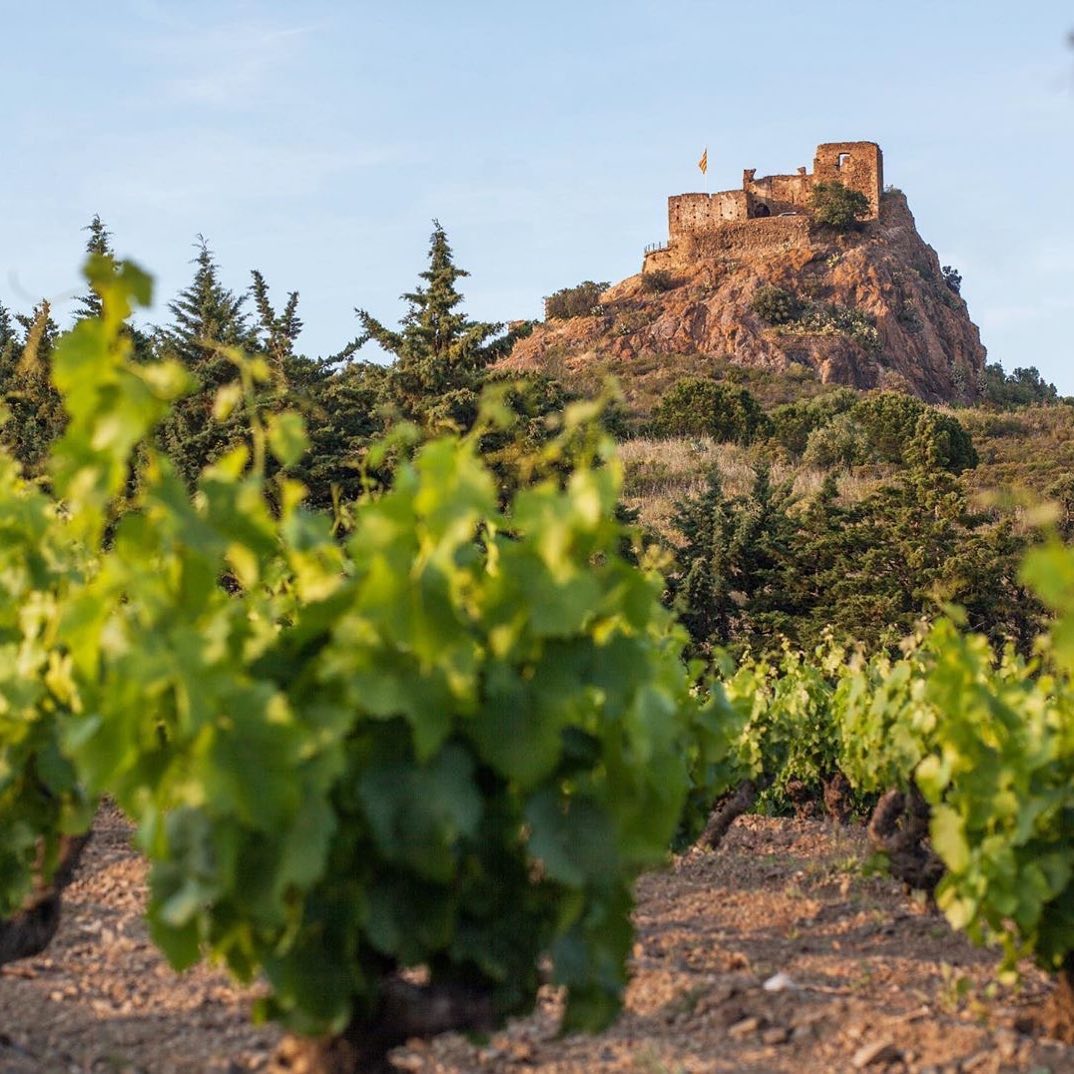
Photo via: https://www.doemporda.cat/

Photo via: https://www.doemporda.cat/

The white wines of Empordà are in the news this week. Just yesterday (March 3, 2020) it was announced that an amendment to the region’s pliego de condiciones had been approved and published in the Boletín Oficial del Estado de Espana (Official Bulletin of Spain). This proposal had been in the works for several years; and allows for the use of the Cariñena Blanca (Carignan Blanc) grape variety to be used in the wines of the region. The Empordà DO is the first to allow the use of Cariñena Blanca in its wines.

Cariñena Blanca is a white-skinned mutation of Carignan Noir (also known as Cariñena, Samsó, or Mazuelo). By all accounts, it has been grown and used in the white blends of the region for generations —the region even boasts some 100-year-old Cariñena Blanca vines—despite the fact that it was never entered into the list of official varieties for Spain. This has all changed now, as the official list of recommended grape varieties for the DO now includes Cariñena Blanca, in addition to Garnatxa Blanca (Grenache Blanc), Macabeu (Macabeo/Viura), and Moscatel d’Alexandria. Other authorized white varieties include Chardonnay, Gewürztraminer, Sauvignon Blanc, and Xarel·lo

There are currently about 55 wine-producing estates and just over 1,825 hectares/4,510 acres planted to vine in the Empordà DO.  Perhaps one of the estates will produced a varietal Cariñena Blanca in 2020—it could happen!

References/for more information:

Post authored by Jane A. Nickles…your blog administrator: jnickles@societyofwineeducators.org
Welcome to the World, Vino de Pago El Vicario!

Photo via: https://pagodelvicario.com/

Photo via: https://pagodelvicario.com/

On Tuesday, August 6, 2019 the EU-approved Vino de Pago el Vicario protected designation of origin/PDO wine of Spain came into force.

The newly-registered Pago is located in the comunidad autónoma of Castilla-La Mancha, and is surrounded by the larger La Mancha DO. The registration of the Vino de Pago el Vicario makes a total of 19 Pagos registered in Spain (of which 12 are located in the region of Castilla-La Mancha). According to the fresh-off-the-presses documentation, the details concerning the Vino de Pago el Vicario PDO includes the following:

Location: 86 parcels are approved for use in the wines of the Vino de Pago El Vicario; all of these are located in the municipality of ciudad Real (Castilla–La Mancha, Spain).

Allowed grape varieties: Tempranillo, Syrah, Garnacha Tinta, Cabernet Sauvignon, Graciano, Petit Verdot Merlot, Chardonnay, Sauvignon Blanc

Photo via: https://pagodelvicario.com/

Photo via: https://pagodelvicario.com/

Types/styles of wine:

  • Vino blanco parcialmente fermentado en barrica (partially barrel-fermented white wine)
    • Produced from Chardonnay and/or Sauvignon Blanc, macerated on the grape skins for 12 to 24 hours prior to pressing; small amounts of Tempranillo and/or Garnacha Tinta may be used as well
    • At least 15% of the must is barrel-fermented and allowed to rest on the lees (in the barrels) for 4 to 8 months. Barrels must be European Oak and no older than two years of age. The remainder of the must may be fermented in stainless steel.
  • Vino blanco de uva tinta (white wine from black grapes/blanc de noir)
    • Produced using Tempranillo and/or Garnacha Tinta
    • Fermented in stainless steel
  • Vino rosado (rosé)
    • Produced using Petit Verdot
    • Stainless steel fermentation
  • Vino blanco semidulce (semi-sweet white wine)
    • Produced from Chardonnay and/or Sauvignon Blanc, macerated on the grape skins for 12 to 24 hours prior to pressing
    • Fermented in stainless steel
    • 1.2% to 4.5% residual sugar
  • Vinos tintos elaborados con mezcla de variedades autóctonas y foráneas (blended red wines made with indigenous and international varieties)
    • Produced using Tempranillo, Graciano, Garnacha Tinta, Cabernet Sauvignon, Syrah, Merlot, and/or Petit Verdot
    • Maceration lasts between 5 and 22 days, grapes may be separately or co-fermented, fermentation is followed by barrel aging (no time specified)
  • Vinos tintos elaborados con mezcla de variedades autóctonas foráneas (blended red wines made with indigenous varieties)
    • Produced using Tempranillo, Graciano, and/or Garnacha Tinta
    • Maceration lasts between 5 and 22 days, grapes may be separately or co-fermented, fermentation is followed by barrel aging (no time specified)
  • Vino tinto dulce (sweet red wine)
    • Produced solely using Merlot
    • Maceration lasts between 6 and 15 days, minimum of 4.5% residual sugar

The area is named for the Vicario Dam, located along the River Guadiana. The demarcated area is located about 2 km (1.2 miles) from the river itself and consists of gently rolling hills leading to the banks of the river. The limestone soil is shallow and contains an exceptionally high level of calcium. The proximity to the river (and its temperature-moderating effects) as well as the unique soil of the area help to differentiate the Pago del Vicario PDO from the remainder of the La Mancha DO.

Welcome to the world, Vino de Pago el Vicario!

References/for more information:

Post authored by Jane A. Nickles…your blog administrator: jnickles@societyofwineeducators.org
News from Muscadet Sèvre-et-Maine: Four New Sub-zones Approved

.

.

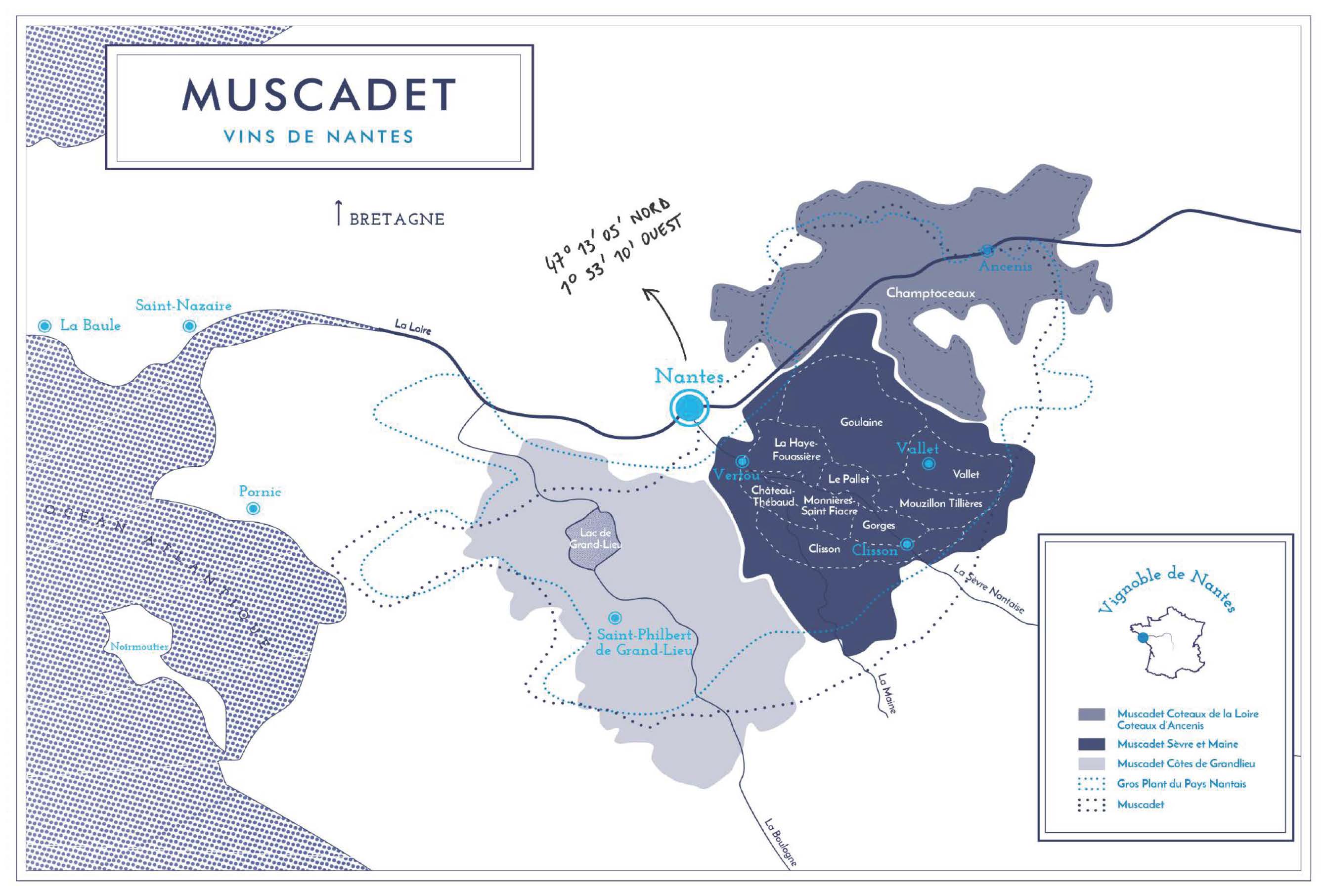
On Wednesday, June 19, 2019 France’s Institut National de l’origine et de la Qualité (INAO) approved a revision of the Cahier des Charges of the Muscadet Sèvre-et-Maine AOC and in doing so, approved four new sub-zones for the appellation. These geographical indications are sometimes referred to as Crus, or Crus Communaux (cru communal zones).

This new announcement means that the appellation now contains seven sub-zones including Clisson, Gorges, and Le Pallet (approved in 2011). These seven sub-zones represent the highest-quality wines (and very limited production) from the large and Muscadet Sèvre-et-Maine appellation.

The Muscadet Sèvre-et-Maine AOC is located in the Pays Nantais area of France’s Loire Valley, and is known for still (non-sparkling) white wines produced using 100% Melon de Bourgogne grapes. Much of the production is produced in the sur lie style, requiring that the wine be aged on the lees (expired yeast cells) until at least March 1 of the year following the harvest. (A sub-zone designation typically requires longer minimum sure lie aging times as well as other specific standards required for qualification.)

Map of Muscadet via: https://www.vinsvaldeloire.fr/en

Map of Muscadet via: https://www.vinsvaldeloire.fr/en

The new sub-zones are as follows:

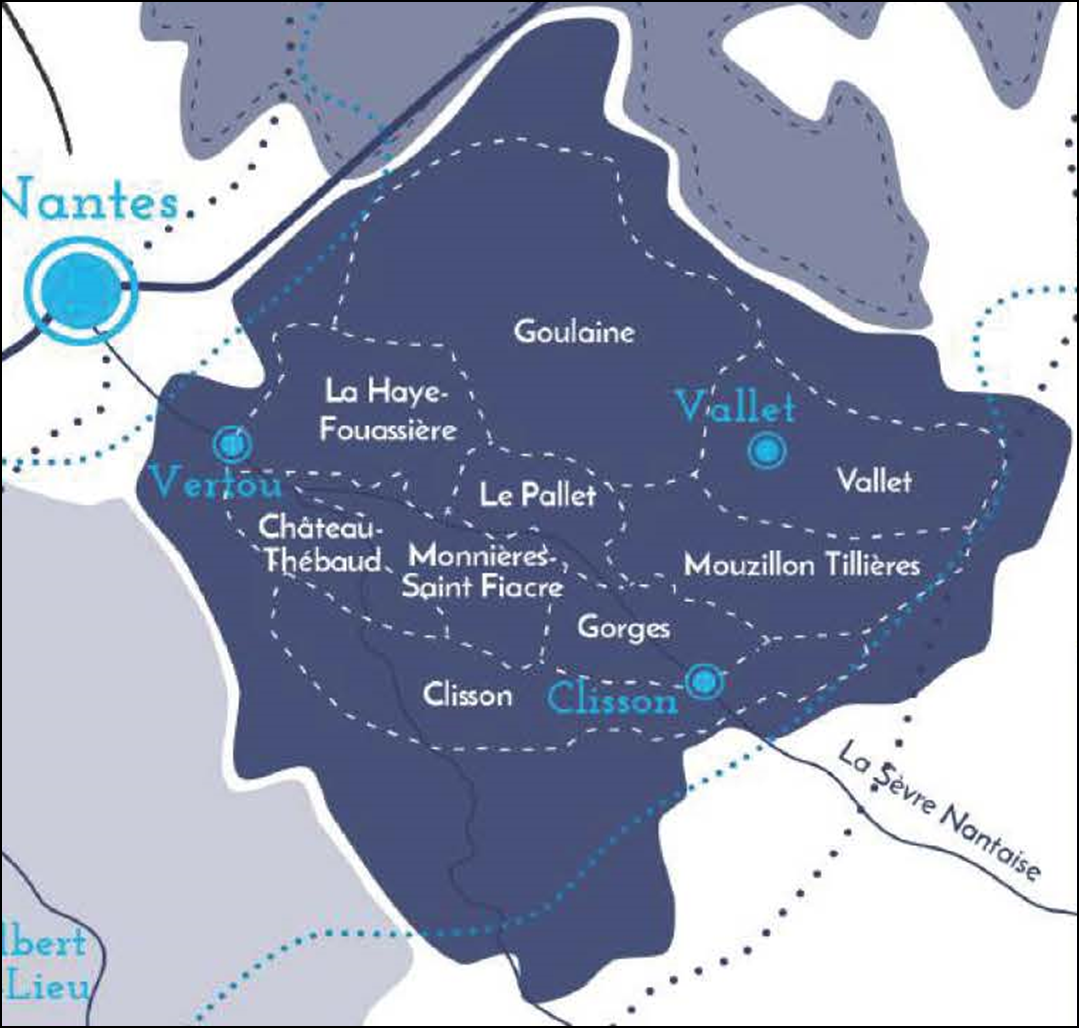
Goulaine: Goulaine is the northernmost as well as the largest of the seven crus of Muscadet Sèvre-et-Maine AOC. This area is dominated by a series of small hills overlooking the Marais de Goulaine (a swampy area known as the Marsh of Goulaine). Top soils are coarse and sandy; subsoils are mainly metamorphic (gneiss and schist). Vines in the Goulaine sub-zone tend to have early bud break and are often the first vines in the area to be ready for harvest.

Château-Thébaud: The Château-Thébaud sub-zone is located in the southwest portion of the Muscadet Sèvre-et-Maine AOC, just to the north of Clisson. The area consists mainly of hills and hillsides, some of them steep and wooded. Many of the finest vineyard sites are located near the Maine River as it flows through this area in a north/northwest direction. Soils are mainly sandy/stony atop granite and gneiss.

Detail of the map of Muscadet via: https://www.vinsvaldeloire.fr/en

Detail of the map of Muscadet via: https://www.vinsvaldeloire.fr/en

Monnières-Saint-Fiacre: The Monnières-Saint-Fiacre cru—also located just to the north of the Clisson subzone—lies just to the east of Château-Thébaud. The vineyards are planted on a succession of hillsides spread over eastern bank of the River Sèvre, extending into the surrounding valleys and woods. The soils consist primarily of sandy loam over a subsoil of gneiss and some clay.

Mouzillon-Tillières: Mouzillon-Tillières is located to the north of the River Sèvre, to the north/northeast of the Gorges sub-zone. It is centered around the Sanguèze River (a 44km-/27 mile-long tributary of the Loire).  The vines are planted on a series of small hillsides and outcrops along both the sides of the river. The soils are mainly composed of sand and clay over gabbro bedrock (gabbro is an igneous rock created by the slow, underground cooling of magma).

Keep those flashcards handy: According to the website of Loire Valley Wines (Vins de Val de Loire), three more areas— La Haye-Fouassière and Vallet (in Muscadet Sèvre-et-Maine), as well as Champtoceaux (located within the Muscadet Coteaux de la Loire AOC)—are being considered for sub-zone status.

Please note that while you will be able to see these subzones on wine labels beginning with the 2018 harvest, the new-and-improved Cahier des Charges for the Muscadet Sèvre-et-Maine AOC (as linked below) will still need to wind its way through the EU registration process.

Click here for more information on Muscadet (note the details on the Clisson, Gorges, and Le Pallet sub-zones near the bottom of the page).

Post authored by Jane A. Nickles…your blog administrator: jnickles@societyofwineeducators.org
References/for more information: